Unusual Hotels for your Bucket List

Jumbo Stay, Sweden
The next time a friend tells you how they were bumped to first class and could stretch out on a reclining seat, tell them about the night you slept inside a 747 on a double bed, with an en-suite bathroom! What’s more, it was in the cockpit, with a flatscreen TV, and view of Stockholm’s Arlanda Airport. Couples might want to consider the private, double Black Box suite at the back of the plane. The 29 rooms on board this converted jumbo jet might not actually fly anywhere, but your one night in a “most unusual hotel” story will certainly have wings.

Desert Cave Hotel, Australia
One sleeps very well in a cave hotel. Possibly because our DNA remembers the thousands of years humanity evolved inside dark caverns, or more likely because it’s quiet, cool, and somewhat impregnable. Located in what is known as the opal capital of the world, Desert Cave is a memorable outback experience. Extreme heat and dust storms make these spacious underground luxury rooms a respite from the world above. There’s also an underground bar, shops, opal interpretation centre, and a history of “dugout” living in the area. Go on, cave into the temptation. See Also: Aydinli Cave House Hotel, Turkey

Giraffe Manor, Kenya
Breakfast on the patio, a bright sunny morning outside of Nairobi. You’re excited to be heading to Masai Mara or one of the other game parks that put Kenya on the safari bucket list. You know you’ll soon get close enough to the animals to put away the zoom lens. As you sip your tea, the large head of a Rothschild giraffe pokes its head through the window, and gives you a lick with its cucumber-sized tongue. Yes, that just happened, as it does every morning at Giraffe Manor, a 10-room luxury hotel located inside a giraffe reserve. The herds love popping their heads in at breakfast or tea, helping themselves to a snack, and giving you the wildest breakfast of your life. Photo: Giraffe Manor

V8 Hotel, Germany
There’s nothing cool about sleeping in your car. Unless that car is a vintage Mercedes, racing VW Beetle or cherry-red Cadillac, converted into a double bed in Stuttgart’s classic car themed hotel. The 10 theme rooms celebrate all facets of the automobile. The Gas Station room lets you sleep in Herbie, the Drive-In room lulls you to sleep with painted stars and soft yellow headlights. Too chintzy? Book the Scrapyard Room, where your bed-car needs a fresh coat of paint (although the hood does hold a large flat-screen TV.) All the rooms look like the dreams of a 12-year-old boy came true, and will therefore appeal to men of all ages. Photo: V8 Hotel

Aux Vieux Panier, Marseille
Small, independent boutique hotels are popular for a very good reason – they provide a different experience from cookie-cutter hotel chains. It doesn’t get any more different than this hotel slash art gallery. Located in Marseille’s historical La Panier district, the five rooms have been turned over to artists to run amok. And amok they have run. One room has hanging columns of wood over the bed. Another was designed to “extract poetry and absurdity.” Each room has an artist statement, incorporating painting, architecture and sculpture. All designed to give you something to think about, and talk about, for years to come. Photo: Aux Vieux Panier
See also: Toronto’s Gladstone Hotel has a similar concept, with 37 unique, artist-designed rooms.

Finca Bellavista, Costa Rica
What makes Finca Bellavista stand-out from other treehouse hotels is its location – both remote and yet surprisingly accessible too. Located off the Pan American Highway in Costa Rica, you enter a world where guests stay in multi-platform treehouses high in the jungle canopy, ziplining to the main lodge for dinner, and surrounded by the sounds and colour of rainforest. The privately owned, eco-friendly treehouses are rented out to overnight guests, giving each a homely atmosphere. Shower on the outdoor platform, high in the treetops, and breathe that rich jungle air. Ah….your own private Pandora.
See also: Free Spirit Spheres on Vancouver Island, where you can fall asleep gently swaying in the trees. Photo: Robin Esrock

Mine Suite, Sweden
Advice for those that found the sandstone cave hotel in Australia too exposed: go deep. The Sala Silver Mine offers guided tours inside and around a former silver mine. At night, descend 155m to the legendary Mine Suite. Left alone (with an intercom to contact an attendant aboveground) the heated double room is so isolated and quiet that an alien invasion wouldn’t interrupt your sleep. All alone, deep beneath the ground, the silence is immaculate. It’s enough to forgive the 50 metre walk to the closest toilet, although at this depth, one should be grateful there is one to begin with.

HI-Ottawa Jail Hostel, Ottawa

If darkness gives you the creeps, match it with a haunted prison cell. After a century of (mis)use, the old Nicolas Street Gaol was closed in the 1970’s due to inhumane living conditions. It opened shortly after as a budget hostel. There are 4 beds to a dorm in the same vaulted cells murderers and thieves once scratched their names in the walls. Evening tours of the former Death Row, isolation cells and ghostly haunts doth not a peaceful night make. Even if your face is as white as the sheets, it’s an experience you won’t forget. See also: The Liberty Hotel in Boston, a former prison, this hotel is far more luxurious.

Crazy House, Vietnam
A local architect felt inspired by Gaudi, Dali, Disney, Sesame Street, Tim Burton, fairy tales, nightmares, monsters, angels, demons, and whatever else can explain the wildest hotel this side of Fantasia. Built as a personal expression, the loopy buildings were opened as a guesthouse to help with heaps of debt. 9 of the rooms are located in three treehouses, the honeymoon suite in the Spider-Web Garden. Like many visitors, you might stay a few nights to experience more than one room, but like the ice hotel, rooms are open to the public for daily tours. Some guests love the creativity, others find it kitsch beyond sanity. As for your dreams…well, they can’t be any weirder than the rooms themselves.

Ice Hotel, Quebec
There are cool hotels, cold hotels, and just plain freezing hotels. Quebec’s Hotel de Glace may look like a winter wonderland, but spending the night is a matter of survival. Guests are provided with Arctic sleeping bags, instructed how to use them, and warmed up before bedtime in hot tubs and saunas. You enter your artist-designed ice chamber with nothing but your jammies, boots and winter jacket. It’s an even -5C in the rooms, and much colder outside. Public bathrooms are located in the heated public area.. A night in the quiet ice hotel is a night bundled up with just your face exposed. Don’t think about sleeping in – if the light doesn’t wake you up, you’ll be asked to leave before the day visitors arrive in the morning.

Bucket List Gondolas, Trams and Funiculars

Chamonix, France
Chamonix, France

Chamonix, France

Let’s start with Europe’s highest gondola, the Aiguille du Midi.   Beginning its journey across the Alps in the tourist hotspot of Charmonix, the téléphérique gives visitors sweeping access to the French, Italian and Swiss Alps, with unparalleled views of the highest mountain in the Alps, Mont Blanc.   Once atop Aiguille du Midi, hop into the red télécabine for the three-mile, 40 minute journey over a dazzling glacier to the Italian border. Drawing heavy crowds in all seasons, beat the queues by leaving early, and by making return reservations once you arrive at the top.

Table Mountain, Cape Town

Table Mountain, Cape Town

Named for the cloud that often sits atop it like a tablecloth, Table Mountain is Cape Town’s most distinguishing landmark. The Table Mountain Cableway has transported over 20 million tourists on the four to five-minute journey to the top, with circular cabin floors rotating to give everyone a good view. Lions and leopards are no longer roaming the mountainside, but this World Heritage Site is home to a variety of small animals and endemic plants.   Closed during strong winds, the temperature can be up to 6C colder at the top, so bring a sweater.  Once there, you can take one of three short walks offering fantastic views of this famously picturesque city and surrounding mountains.

Sugarloaf Mountain, Rio de Janeiro


Sugarloaf Mountain, Rio de Janeiro

I’ve been in love with gondolas ever since I saw the James Bond film Moonraker, featuring a thrilling chase scene of the cable car up Sugarloaf Mountain.  Ascending almost 400m, first up Morro da Urca and then Sugarloaf, the gondola offers 360-degree views of the beaches, ocean, mountains and landmarks that make Rio one of the world’s most beautiful cities. Of course, Moonraker also made me wonder how the villain Jaws managed to literally chew through the steel wire transporting the 65 passenger cars.   Fortunately, the system has been fully updated, ensuring no bad guy will be using this cable car for dental floss (see below).

Banff Gondola
Banff Gondola

Banff Gondola / Jasper Tramway

The two towns that serve Canada’s oldest national parks boast a world-class gondola and tramway. There are technical differences between gondolas and aerial tramways. Tramways work like elevators, with a counter-balance car, where as gondolas can leave more frequently, like ski lifts.   The Banff Gondola Mountaintop experience is an eight-minute ride to the top of Sulphur Mountain, in a four-passenger cabin climbing to an elevation of 2,281 metres. At the top you’ll find a restaurant, a Cosmic Ray Station Historic Site, and a 1km self-guided interpretative Skywalk.   The Jasper Skytram is the longest and highest guided tramway in Canada, giving visitors spectacular views of six mountain ranges, glaciers, alpine lakes, and the town of Jasper itself.

Quebec City Funicular


Old Quebec Funicular, Quebec City / Valparaiso, Chile

Neither are very long, nor very thrilling, but these old funiculars are definitely fun, not to mention convenient.   Opened in 1879, Quebec’s 64m long funicular is an easy way to transition from Upper Town to Lower Town, where you can explore the Petit Champlain district, port and museums.   Open until midnight in the summer, it is the only funicular of its kind in North America. Valparaiso is a city of hills, serviced by 10 funiculars, although at one time there were 26 working elevators.   Protected by the World Monument Fund as an endangered historical treasure, the funiculars are not only practical to navigate Valparaiso’s steep hills, but they also give great views of the city and harbour.

Singapore Flyer
Singapore Flyer

Singapore Flyer / London Eye

OK, these are Ferris Wheels, but since both involve you getting into a glass-domed car, ascending high into the sky, and taking pictures of a city’s view, the sentiment is the same. Opened in 1999 at a cost of £70 million, the London Eye has quickly become the biggest tourist attraction in the UK. It takes a half hour to make a full rotation, with 25 mile long views in every direction. When it opened in 2008 – the Singapore Flyer – stole the Eye’s thunder and, at 42 stories high, is currently the tallest Ferris wheel in the world. Located at the Marina Centre, the Flyer’s 28 air-conditioned capsules take a half hour to rotate, with terrific views of the city. Both the Eye and the Flyer can be rented out for corporate events, dinner parties and weddings.

Whistler's Peak 2 Peak
Whistler’s Peak 2 Peak

Peak 2 Peak, Whistler

When the peaks of Whistler and Blackcomb decided to connect via gondola, it needed one serious engineering achievement.   The resulting Peak 2 Peak Gondola holds the world gondola records for the highest point above ground (436m), and longest free span between towers (3.03km), and the two largest lift terminals in the world. Each winter, the 11-minute journey gently ushers over 4000 people an hour between the mountains of North America’s largest ski resort. Only two of the 28 cabins have a glass bottom, so consult the wall chart at the terminal to see when it is approaching. Cars arrive and depart ever 49 seconds.

The Peak, Hong Kong
The Peak, Hong Kong

The Peak, Hong Kong

Opened over 120 years ago, The Peak is one of the world’s oldest and most popular funiculars, rising 396 metres above sea level on a gradient so steep it appears buildings are leaning on their side. Besides the expected gift shops and restaurants, it’s well worth visiting the Peak Tower for the panoramic views of Hong Kong.   There’s also the Sky Terrace 428, with the highest viewing platform in the city, and you can walk along one of several walking trails. The funicular itself ascends up Victoria Peak on a 1.4km railline, and takes just under five minutes to reach the top.

Grouse Mountain
Grouse Mountain, Vancouver

Grouse Mountain Skyride, Vancouver

North America’s largest aerial tramway system offers visitors to Grouse Mountain stunning views of Vancouver, surrounding forests, mountains and the Gulf Islands in the distance. The 45-passenger car runs 365 days a year, depositing tourists and locals at the top to enjoy a range of activities, including a gourmet restaurant, wildlife, and a busy ski resort in winter.   During summer, you’ll find a grizzly bear enclosure, bird of prey shows, logging demonstrations, and ziplining and paragliding for the more adventurous.   On the way down, you might notice some particularly sweaty passengers. A popular local pastime is to hike up the punishing Grouse Grind, and take the Skyride down to the parking lot.

The Sea to Sky Gondola

The Sea to Sky Gondola

Western Canada is making a bold claim to the Bucket List gondolas podium. Squamish, located between Vancouver and Whistler, has the outstanding Sea-to-Sky Gondola with astounding views of Howe Sound, Sky Pilot Mountain, and one of the world’s bucket list climbing walls, the mighty granite Stawamus Chief. The 849m-long gondola takes you right to the top of an adjacent mountain, where you’ll find a 65m-high suspension bridge, scenic walking loops, as well as new hiking and biking trails. Celebrate the commendable execution of BC’s latest attraction with a craft beer on the sunny patio of the Summit Lodge.

Ba Na-Suoi M, Vietnam

Ba Na-Suoi Mo, Vietnam

Fifty kilometres west of Da Nang City is the world’s longest single wire cable car system, spanning over 5 kilometres in length. The Ba Na Hills gondola trip takes 15 minutes to reach the top, with passengers enjoying views of the surrounding mountains, the Han River, and lush jungle. A 27 metre high Buddha also rests at the top, along with gardens and an impressive pagoda. The gondola prides itself on being built to European standards of comfort and safety.

Oh, and by the way, if you’re afraid of getting into a gondola or tramway,  I’m almost entirely positively certain that this will never happen.

jaws

The World’s Most Extreme Places

hot

The World’s Hottest Place

Here’s a contentious category, with various contenders vying for the top hot spot. Historically, the victor was El Aziza in Libya, where the ground temperature was recorded in 1922 at a whopping 58°C. Furnace Creek in California’s Death Valley clocked in at an impressive 56°C, but it was not until satellites could measure thermal temperatures that the true victor could scorch their way to the top. Researchers at the University of Montana analysed infrared satellite data and the results were surprising. According to five years worth of data, the hottest place on Earth is Iran’s Lut Desert, where the land skin temperature was measured at 70.7°C. At that heat, you can fry an egg on your hand!

cold

The World’s Coldest Place

On November 23, 2010, Alberta recorded temperatures that made it the second coldest place that day on the planet. What’s remarkable about this fact is that it included populated cities like Edmonton and Calgary, where the wind chill cranked the chill to around -41°C. Pollockville, 250km east of Calgary, had to deal with -49°C. But that’s toasty compared to how cold it can get in Antarctica, which reigns supreme for recording the coldest temperatures on Earth. Scientists in Vostok, near the magnetic south pole, recorded land temperatures at a brrrr-isk -89.2°C, measured during the dark winter months of June and July. The coldest permanently inhabited town is said to be Oymyakon in Russia’s northern Sakha Republic, which clocked in at a frisky−71.2 °C.

rain

The World’s Wettest Place

There are half a dozen contenders in this category, with different research methodologies determined to soak up the glory. When I visited Kauai, Hawaii’s Garden Island, I was told by proud locals and guides that Mount Wai-‘ale-‘ale is the wettest spot on Earth, with rain falling between 335 and 360 days a year, drowning in up to 13,000mm each year. The Guinness Book of World Records recognizes this achievement, but the US National Climatic Data Center gives the title to Colombia’s Lloro, which receives over 12,000mm a year. Cherrapunji in north-eastern India is another contender, even more remarkable since its annual rainfall (almost 11,000mm) falls mostly in the monsoon months between June and August. Back in Colombia, a freak rainy season in 1974 deposited 26,303mm of rain on the town of Tutunendo. It puts living in rainy Vancouver, where the average annual rainfall is just 1588mm, in perspective.

wind

The World’s Windiest Place

For 75 years, Mount Washington in New Hampshire held the record for the highest wind speeds ever recorded, 231 miles per hour at the top of its peak. It was a freak event, much like the cyclone in Barrow Island, Australia that blew right past the record, clocking in at 253 miles per hour. The most consistent windiest place on the planet is Commonwealth Bay in Antarctica. As for the windiest cities, forget Chicago. Citizens in Wellington New Zealand, Reykjavik Iceland and Cape Town, South Africa would do well to invest in extra strength umbrellas.

dry

The World’s Driest Place

The Atacama Desert stretches across northern Chile into parts of Bolivia and Peru, and is known as the driest place on the planet. Average rainfall is as little as 1mm a year, with some weather stations having never recorded any rain at all. The town of Arica, a launchpad for tourism excursions into the Atacama, did not record any rain for over 15 years! Crossing the Atacama in a 4×4 is one of my highlights of visiting South America, witnessing its otherworldly landscapes and rock structures. Scientists have compared the Atacama to conditions of Mars, which is why NASA test-drove their Mars Rovers here. Oddly enough, the driest continent is Antarctica, which receives less than 2mm rain a year, even though it is primarily made up of compacted snow and ice.

deep

The World’s Deepest Place

James Cameron, director of Avatar and Titanic, broke the world record to become the first human to visit the deepest spot on the earth – the desolate, alien and lunar landscape that sits almost 11km deep at the bottom of the ocean known as the Mariana Trench. Located in the Western Pacific, the 2550km long trench forms the boundary of two tectonic plates. While pressure at the bottom is over 1000 times that found at sea level, researchers have still found life in the form of fish, shrimp and other organisms. Decaying animal skeletons, shells and other organisms give the seabed a yellow colour. Cameron filmed his descent in 3D for a documentary, and collected samples for scientists to shed more light on the darkest of ocean deeps.

high

The World’s Highest Place

The world’s highest mountain is Mount Everest, towering at 8848m above sea level. If you dared to climb atop its dangerous peak, as thousands of climbers do every year, you would not however be the closest to the moon. The planet’s shape is an oblate spheroid, much like the shape of a balloon if you were to sit on it. The result is that mountains close to the equator stick out further than mountains closer to the poles, not in terms of height above sea level, but in terms of its closeness to the stars and distance from the earth’s centre. Cleverer people than I have done the calculations, and determined that the 6310m high Mount Chimborazo in Ecuador lies on the bulge, and as such is about 2.4 km closer to space than Everest!

deadsea

The Deepest Place Below Sea Level

On dry land, you can’t get any lower than visiting the Dead Sea, the salty lake that shares its banks with Israel and Jordan. To get there, you’ll drive along the world’s lowest road, and float in its famously buoyant waters 423 metres below sea level. 67 kilometres long and 18 kilometres wide, this lifeless sea is 8.6 times saltier than the ocean, which is why you can comfortably sit back and read a newspaper during a dip. The health benefits of the mineral waters and thick mud of the Dead Sea have been prized since Biblical days, making it one of the world’s first health resorts. A drop in groundwater and flow of water from the Jordan River has resulted in significant shrinking of the Dead Sea, causing much concern for both the tourism and cosmetic industries that support it.

danger

The World’s Most Dangerous Country

Forbes Magazine went through data looking at crime rates, risk of terrorism and kidnappings, police protection, corruption and political stability to determine the world’s most dangerous countries. Receiving the bronze medal on the podium is Somalia, which has not had a real government for 15 years, where militants run wild and piracy is rampant. The silver medal goes to Iraq, a hotbed of fundamentalism and instability, its citizens living under the constant threat of bombings and deeply corrupt government officials. Winning the gold medal, which will probably make its way to a Swiss bank account faster than I can type this sentence, is Afghanistan. Tribal warfare and corruption is rife, especially on the Pakistan border, where it is estimated that every citizen owns an automatic weapon. And of course, let’s not forget Syria. Hopefully all will one day be in a position to safely add to the Global Bucket List.

young

The Youngest Place on Earth

Iceland, the real land of Fire and Ice (Game of Thrones notwithstanding) boasts the youngest place on the planet with its southern-most point, Surtsey Island. This 1.4 km2 island dramatically emerged from the sea during a volcanic eruption in 1963. The volcano stopped erupting almost four years later, with the intense flow of lava resulting in a new island in the Atlantic. Since then, erosion has whittled away some of the land, but its hard igneous core has remained firm. The island was declared a nature reserve in 1965, and a UNESCO World Heritage Site in 2008, for its scientific value. Scientists are studying how plant, bird and marine life are evolving on the island, with human impact carefully monitored and kept to a minimum.

A Bucket List of the World’s Best Night Markets

night-market2


There’s simply no choice between a mall and a night market.   Instead of food courts, you have local cuisine cooked before your eyes. Instead of multinational clothing chains, you have handmade knits and knock-off fakes.   Instead of sterile hallways, you have cluttered narrow pathways full of smiles, smells, and secrets.   After shopping around, here’s our pick of the best:

  1. Luang Prabang, Laos

Night markets in Asia are usually loud and chaotic, yet my memory of this sleepy city’s night market, located along Sisavangvong Road, is one of calm. There is very little pushing and prodding to buy this or that, in stark contrast to markets found in neighbouring Thailand or Cambodia. Around 300 traders sell a wide range of goods – from pillows and covers to lanterns to cheap Beer Lao T-shirts, the perfect souvenir from Laos. Without the pressure, it’s almost impossible not to spend your kip, the local currency. It’s always advisable to haggle, and don’t expect the best quality.   Open daily, the market closes early at around 10pm.

  1. Queen Victoria Markets, Melbourne Australia

During the summer months, Melbourne has several vibrant night markets, gathering local artists, designers, traders, with food and entertainment from around the world. Every Wednesday November to March at the Queen Victoria Markets, on the corner of Peel and Victoria streets, you can find the popular Suzuki Night Market, with 35 ethnic food stalls, art, clothes, and jewelry traders. On Fridays in late January/February, you can shop away and enjoy the atmosphere at the Geelong Night Market in Johnstone Park.   Besides the stalls, there is also a health and harmony section, and licensed bars to enjoy a cool drink on a warm summer night.

  1. Huaxi Street Tourist Night Market, Taipei, Taiwan

There are six major night markets in hot and sticky Taipei, with the most famous, and most notorious, being Huaxi, also known as Snake Alley. Once a legal red light district, Snake Alley is known for the exotic dishes served by its restaurants and stalls.   These include snake meat, including their blood or even their venom, milked from their fangs. There’s also turtle meat, deer penis soup, and other delicacies that draw tourists. Surrounding the market are stalls selling all manner of goods, proudly Made in Taiwan.

  1. Summer Night Market, Richmond, BC

During summer, some 300 traders set up stalls each weekend in Richmond, one of the growing satellite cities next to Vancouver.   Reflecting the multiculturalism of Richmond’s large immigrant population, the night market features strong Asian, Indian and Latin American influences. Grab yourself a bubble tea and catch a live salsa performance on the 60ft stage, or just roam the alleys looking for bargains on clothing, electronics and souvenirs. The market attracts some two million visitors a year, and often features themed nights, like Taste of Asia, or Chinese Karaoke Night.

  1. Chiang Mai Night Market, Thailand

Crammed into three blocks on Chan Klan Road, the night market and bazaar of Chiang Mai is extremely popular with visitors.   All manner of goods are on sale from traders packed on the sidewalks, or in purpose-built malls. Friendly tailors beckon you into their shops, old ladies fry up noodles, and lanterns cast a soft glow in the night. Operating every night of the year, the market is considered to be amongst the cheapest in the country.   Don’t expect lasting quality from the goods on sale, although I still have various candleholders and even some shirts I bought many years after my visit. Traders will typically start their price at double what you should pay, so remember to bargain.

  1. Batu Ferringhi Night Market, Penang, Malaysia

The Malay word for night market is “pasar malam”, a popular example of which can be found in Penang at Batu Ferringhi (literally, “Foreigner’s Rock”). Vendors in small stalls sell the usual knick knacks – clothes, shoes, accessories, bags, watches, jewelry, and other goods of authentic or dubious origins. The night market draws tourists with the sweet smells of local cuisine, and is close to a beach and pool area as well.   It sets up each day in the late afternoon and operates from 6pm until the customers thin out.  International hotels are located along the beach strip, with some directly facing the market.

  1. Christmas Market, Nuremburg, Germany

Every Xmas, markets pop up all over the Germany, differing from region to region. Frankfurt has the largest Christmas Market in Germany, along with the tallest Christmas tree. But the most famous Christmas market is in the Bavarian city of Nuremburg. This market is a popular place to pick up toys, ornaments and candles, along with treats like biscuits and sausages roasted over wood fires. Located throughout the old town, the market has nearly 200 wooden stalls, many sporting red and white cloth.   They even compete for the most beautiful and tasteful stall award. More than two million people visit it each year.

  1. Temple Street Night Market, Hong Kong

Hong Kong is a legendary destination, and its most popular night market doesn’t disappoint. There’s a wild variety of goods and services on offer, including fortune tellers, palm readers and impromptu Opera street performances. Open from 2pm onwards, the market is located on Temple Street next to the Jordan MTR station in Kowloon. As with most night markets, street food features prominently. Try some of the sticky sweet desserts and browse for electronics, antiques, and lamps. But remember, you break you buy

  1. Marrakech Night Market, Morocco

Enter the Jemaa El Fna night market near the heart of Marrakech’s medina, and you’ll feel like you’ve stumbled onto a set of Indiana Jones. Expect a cacophony of snake charmers and monkey dancers, hagglers and hustlers, juice being freshly pressed over the sounds of salesmen beckoning their next client. Each night, over 100 open kitchens are set up, serving cheap but delicious Moroccan cuisines to patrons seated at long rows of wooden tables. Each kitchen typically serves one dish, and you might want to watch your food being cooked to avoid any tummy upsets later. The night market is open until 2am in summer, and around midnight in winter

  1. Donghuamen Night Market, Beijing, China

Here’s what I like about this particular night market: where else can you find rows of stalls featuring raw insects, scorpions, crickets, centipedes and lizards, ready to be deep fried in wok for your culinary enjoyment?   Sure, you can stick with dumplings, noodles or fresh fruit, but sometimes, you just find yourself craving a deep fried starfish.   All the prices are marked (in case you’re too hungry to haggle) and conveniently displayed in both Mandarin and English.   Don’t know about you, but I’m salivating at the thought of it!

The World’s 11 Greatest Explorers

Several years ago I had the honour of being the Master of Ceremonies at the Explorer’s Club Annual Dinner in New York.  The Club, which is over a century old, has counted amongst its members adventurers like Edmund Hillary, Neil Armstrong, Jane Goodall, and Theodore Roosevelt. After hobnobbing with astronauts and pre-eminent world adventurers, I felt compelled to learn about the eleven greatest explorers of all: 
Picture
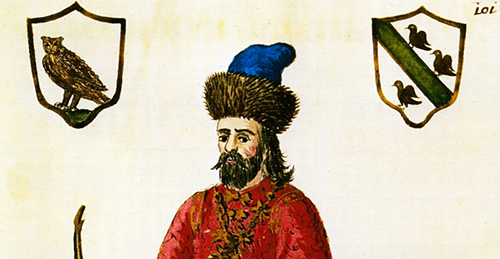
Marco Polo
A great explorer named Roald Amundsen once said: “adventure is just bad planning.”   In the days of Marco Polo, a 13th century teenager journeying into the unknown with his father and uncle, an adventure was all but guaranteed.  Polo returned to his native Venice 24 years after he set out, having travelled further into Asia than any European before him.  Polo’s stories inspired people with tales of exotic lands, strange civilizations, and curiosities like paper money, eyeglasses and spaghetti.  Although it is odd that he never wrote about The Great Wall of China, or tea, his writings inspired the imaginations of countless explorers to come, including Christopher Columbus.

Picture

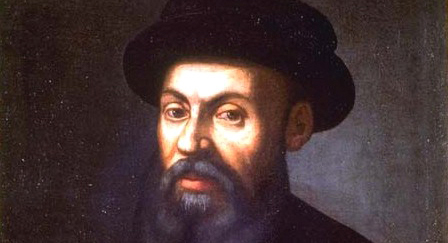
Magellan
Portugal gave the world many of its great explorers, such as Magellan, the first navigator to cross the Pacific, and lead an expedition that ultimately circumnavigated the globe. The Age of Discovery was not for the faint-hearted.  Some 232 sailors died on Magellan’s expedition, including Magellan himself, who was hacked to pieces by a tribe in the Philippines.  Although Portuguese, Magellan was funded by rival Spain in his quest to open new spice routes.  The expedition discovered the need for an international date line, and reported of unknown creatures like the penguin and llama.  While the great voyage did not reap the material benefits Spain had wished, it did establish the true scale of the planet.

Picture

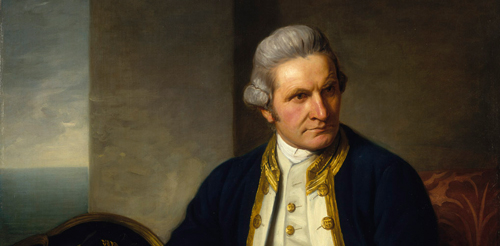
Captain Cook
During three great voyages in the late 18th century, Cook became the great discoverer of the Pacific Islands and beyond.  On his first voyage, his crew mapped New Zealand and became the first Europeans to see Australia’s east coast.  Surviving the rigors of sea and the malaria that claimed many of his crew, Cook returned home before embarking on his second voyage, crossing the Antarctic Circle, returning to New Zealand before discovering the islands of Vanuatu, New Caledonia, along with Easter and Norfolk Island.  Here is a man who clearly was immune to seasickness.  His final journey brought him to North America, where he sailed along the Alaska and the coast of what is now British Columbia.  Cook was the first European to discover Hawaii, and it here where he met his fate at the hands of hostile natives.  Considering the length of his adventure and the scale of his journey, it is remarkable that Cook survived as long as he did.   The Cook Islands, which he discovered in 1773 as the Hervey Islands, was renamed in his honour in the 1800’s.

Picture

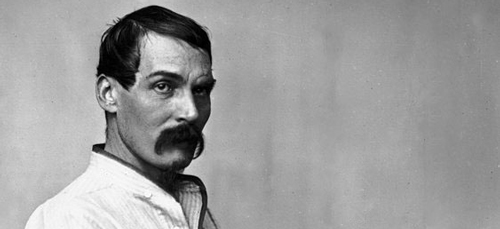
Richard Francis Burton
Before Richard Burton the actor, there was Sir Richard Francis Burton, the great British explorer.  Here is a man who could communicate in 29 European, Asian and African languages, who brought the Karma Sutra to the scandalized Victorian era, and who got circumcised during his successful plan to experience the Hajj to Mecca.  During his African adventures, Somali warlords impaled his face with a spear, leaving an intimidating scar. He searched the source of the Nile, discovered Lake Victoria, and survived the politics and spats of the conservative Royal Geographical Society.  Devoted to eastern religions and breaking sexual taboos, many of his journals were ironically burned by his wife after his death, perhaps scandalized by what she had read.

Picture

Nelly Bly 
The domain of great explorers is not limited to men.  Think of Amelia Earhart, or Junko Tabei who became the first woman to climb Everest and all seven summits.  Gertrude Bell, Isabella Bird, Mary Kingsley, and young Laura Dekker, who sailed the world solo at the tender age of 15.  In 1890, 26 year-old American journalist Nelly Bly set the world record for the fastest trip around the world.  Inspired by Jules Verne, she completed the journey from England, through Europe, Asia and onwards to North America in 72 days, travelling primarily by rail and steamboat.  Spare a thought for Canada’s own Aloha Wonderwell, once marvelled in the media as “the world’s most travelled girl.”   Her remarkable life, which includes being the first women to drive across India as well as Cape Town to the Nile, reads like a big budget Hollywood movie just waiting to happen.

Picture

Vasco da Gama

We return to the Great Age of Discovery where Portuguese navigator Vasco da Gama sailed from Europe to Africa, before pointing his ships east into unchartered territories.   The surviving crew had already sailed 6000 miles of open ocean, more than anyone before them.  Now they made their way up the East Coast of Africa, encountering hostile sultans before crossing the Indian Ocean to land in India just 23 days later.  After a less than favourable welcome, unfavourable winds resulted in it taking 132 days for the return crossing, by which time half the crew were dead.  Although da Gama eventually returned to a hero’s welcome in Portugal, his subsequent actions were far from heroic.  Returning to India several years later, he became known for his brutality, massacring innocents along the way, mutilating prisoners, and failing to secure peaceful trade with the Indian sub-continent.

Picture

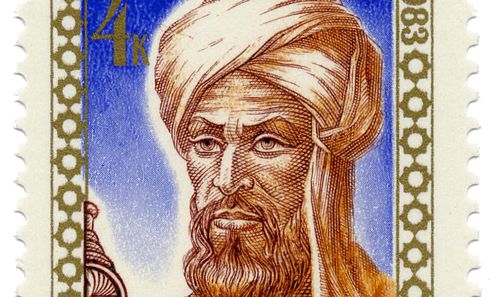
Ibn Battuta
Why is it that kids play the tag game “Marco Polo” and not Ibn Battuta?   Here was a near contemporary who travelled more than 73,000 miles in an age of sailboats and mules, who explored most of the known Islamic world including North and West Africa, South and Eastern Europe, South, Central and Southeast Asia as well as the Middle East and China.  It took him 30 years to visit today’s equivalent of 44 countries, aided by large caravans of unfortunate slaves for trading along the way.    Ibn Battuta’s adventures were recounted from memory in a great tome called the Rihla, but scholars have since questioned some of his claims.  The book lay in obscurity before it was rediscovered and translated in the 19th century, firmly establishing Ibn Battuta as one of history’s greatest travellers.

 Wanderwell

Aloha Wanderwell
Someone call Angelina Jolie.  You’ve probably never heard of a young Canadian lass named Idris Hall, aka Aloha Wanderwell.  Still a teenager, she hopped into a Model T Ford and drove through 75 countries in the 1920’s.  They called her “The World’s Most Travelled Girl.”   An early filmmaker, Aloha captured her husband and two kids as they explored the world.  Did she have adventures?  Stranded in Brazil, she lived with and documented the Bororo people.  Trying to find fuel (never mind roads) in the 1920’s, she used crushed bananas and animal fat for fuel.   Her husband was mysteriously murdered.  Apparently, she cut her hair and fought for the French Foreign Legion. She flew a seaplane.  In Indochina, she had to shoot her way out of a gauntlet of angry elephants.  She died in obscurity, and you’ve probably never heard of her. Even with a name like Aloha Wanderwell.

Picture

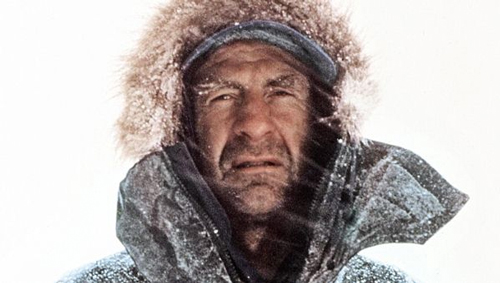
Sir Ranulph Fiennes
You’ll notice that everyone on this list is no doubt enjoying the great discovery of the afterlife.  All except Sir Ranulph Fiennes, who owns the moniker of being “the world’s greatest living explorer.”  Amongst his most notable accomplishments, Fiennes was first to reach both poles, cross the Antarctic and Arctic Ocean, hovercraft the Nile, cross the Antarctic unsupported, discover a lost city in Yemen, circumnavigate the world on its polar axis,  and run 7 marathons in 7 days on 7 continents – less than 4 months after a massive heart attack.  Clearly, the old boys would be proud that today’s stock are as hard core as ever, and what’s more, Fiennes has raised millions of dollars to fight cancer.   No slaves, no mutilations, just physical prowess and a true spirit of adventure.

Picture

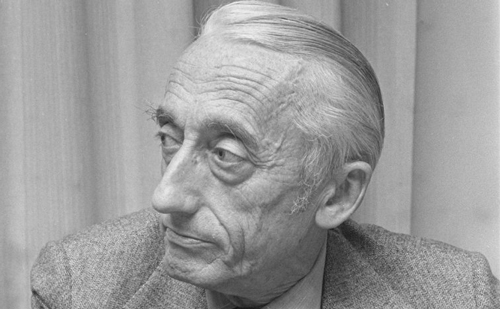
Jacque Cousteau
For all the great explorers who have explored our world on the ground and above the seas, one man stands out for his remarkable work underwater.  70% of the planet is covered in water, and Jacque Cousteau’s work to enable underwater exploration, conservation, and photography (so us landforms can see what before we could not) makes him an icon in the world of discovery.  Cousteau’s efforts resulted in modern breathing apparatus like the Aqua-Lung, while he was the first man to brave the ocean, and freshwater deeps.   Another great underwater explorer deserves mention here as well.  Dr Sylvia Earle has proved underwater is far from a man’s world:  The National Geographic Explorer-in-Residence has led over 70 expeditions, broke numerous depth records, and logged lover 6500 hours underwater.

Picture

Travel Writers
We know about many of these explorers because of the writings that have accompanied them through the ages.  Travel writers have not only experienced wild adventures, they’ve communicated them in a way that brings us all along for the ride.  Among the greats: Ryszard Kapuscinski, V. S. Naipaul, Paul Theroux, Bruce Chatwin, Mark Twain,  Ernest Hemingway, Eric Newby, Pico Iyer, and a few of my personal favourites, Bill Bryson, Robert D Kaplan and Jon Krakauer.   These and thousands of others have journeyed to last outposts, deep jungle and wild frontiers to bring us words and images of a brave new world.With a nod to Shackleton, Columbus, Scott, Lewis & Clarke, Fawcett, Hillary, Astronauts, Cosmonauts, and all those brave men and women who continue to push the boundaries of experience.  Hey look, apparently I’m among some of them too!