The Best Winter Experiences in Canada

Canadians don’t let snow, ice and freezing rain get in the way of a good adventure. Travelling to every province and territory to research our sister book, The Great Canadian Bucket List, I discovered exceptional winter experiences to add to the list of things to do in Canada – or anywhere else – before you die. Here’s my round-up of the best winter experiences in Canada:

Skoki Lodge, Alberta

Winter guests cross-country ski a challenging 11km to reach Western Canada’s oldest backcountry lodge. No roads, no 4×4’s – just a path through pristine wilderness inside the Lake Louise Ski Resort, located within Banff National Park. Awaiting you is the rustic wooden Skoki Lodge, built in 1931 and selected by early mountaineers for its remoteness, scenic beauty, and access to exceptional ski trails. No running water, no electricity, no bathrooms either – just a homely throwback to yesteryear, where friends and strangers explore the outdoor beauty of winter, indulge in fabulous meals, then gather round the fire with great stories and a cup of hot chocolate.

Polar Bear Safari, Manitoba

Each fall, the outpost town of Churchill receives unusual guests. Among them are scientists, researchers, and wildlife enthusiasts armed with cameras. Nearly one thousand visitors are polar bears, waiting for the Hudson Bay to freeze in order to head north and feast after their long, summer fast. The world’s most southerly population of polar bears migrate around Churchill, which is why the town has closed-circuit cameras, bear traps, and a bear jail for bears that get a little too close. It also has tour operators like Frontiers North and Churchill Wild, with customized elevated tundra buggies that take you safely into the tundra to get up close and personal with the world’s largest carnivore. Having a polar bear fog up your camera lens with its hot breath is definitely one for the Bucket List.

Heli-Sking, British Columbia

When a helicopter becomes your own personal ski chair, dropping you on top of mountains with deep, virgin powder stretching in every direction, it’s hard to go back to your local hill. CMH Heli Skiing’s 11 lodges, operating in BC’s Columbia Mountains, attract eager clients from around the world. Joining a group of Americans, Brits and Australians, I quickly understood why. Averaging about 12 runs a day through terrain that freezes a grin to your face, powder skiing or riding is the closest activity I’ve experienced to flying – and I’ve paraglided on 4 continents. It takes a while to get the hang of deep powder, and strong winds and avalanches can ground both helicopters and skiers, so you’ll want to book at least three to five days to tick this one off your Bucket List. Admittedly your whirlybird ski-chair does not come cheap, but with a guaranteed amount of untracked vertical feet, the exhilaration is worth it.

Winter Carnival, Quebec

Shake your booty at Rio’s Carnaval, collect your beads in New Orleans, but whatever you do, don’t miss out on the world’s largest winter festival. For over half a century, Quebec City’s annual Winter Carnival has attracted millions of revellers to its celebration of snow, ice, and sub-zero temperatures. Festive parades, snow carving, slides, rides and competitions greet visitors to the city’s Battlefields Park, where locals and guests wear the traditional ceinture fléchée, a colourful French-Canadian sash. Stroll down Grande Allée and pull up to an ice-bar for some caribou – a hot mulled wine with whiskey. When the thermometer plummets below -15°C and crowds are still on the streets cheering acrobats on decorated floats, you can feel the chill of winter shrivel.

See the Northern Lights, Northwest Territories

In a UK poll that asked 22 million people what destinations or activities top their Bucket List, 27% (the second highest percentage) said they want to see the northern lights. One of the best places in the world to do this is in Yellowknife. The city lies beneath a halo-like ring known as the aurora oval, where lights flare in the sky with an increased intensity. With few geographical obstructions, and a high percentage of clear winter nights, the northern lights are particularly active from mid-November to mid-April. Experience aurora watching in comfort thanks to tour operators like Aurora Village and Yellowknife Outdoor Adventures, who provide heated viewing decks, hot drinks, and comfortable chairs in cabins removed from local light sources. Watching green, red and blue lights dance across a clear northern sky is a natural spectacle that belongs on Canada’s Bucket List too.

Go Dogsledding, Yukon

The huskies, labradors and tough-as-nails Yukon mutts found in Whitehorse’s Muktuk Kennels are the happiest dogs I’ve ever seen. Lovingly named, cared for and exercised, the kennel’s 125 dogs can’t wait to you pull you on a sled into the surrounding valley. You’ll quickly learn that dogsledding is all about teamwork. If the dogs are not happy, you’re not going anywhere. Fortunately, Muktuk’s friendly mushers are there to guide you. As for your team, they’ll reward you with licks, howls and even cuddles. Muktuk’s dogs make loyal, well-trained pets, and runs an adoption program for their retired dogs. It was -30°C the afternoon I spent sledding with eight delighted northern dogs, but some experiences will forever warm the soul.

Bucket List Gondolas, Trams and Funiculars

Chamonix, France
Chamonix, France

Chamonix, France

Let’s start with Europe’s highest gondola, the Aiguille du Midi.   Beginning its journey across the Alps in the tourist hotspot of Charmonix, the téléphérique gives visitors sweeping access to the French, Italian and Swiss Alps, with unparalleled views of the highest mountain in the Alps, Mont Blanc.   Once atop Aiguille du Midi, hop into the red télécabine for the three-mile, 40 minute journey over a dazzling glacier to the Italian border. Drawing heavy crowds in all seasons, beat the queues by leaving early, and by making return reservations once you arrive at the top.

Table Mountain, Cape Town

Table Mountain, Cape Town

Named for the cloud that often sits atop it like a tablecloth, Table Mountain is Cape Town’s most distinguishing landmark. The Table Mountain Cableway has transported over 20 million tourists on the four to five-minute journey to the top, with circular cabin floors rotating to give everyone a good view. Lions and leopards are no longer roaming the mountainside, but this World Heritage Site is home to a variety of small animals and endemic plants.   Closed during strong winds, the temperature can be up to 6C colder at the top, so bring a sweater.  Once there, you can take one of three short walks offering fantastic views of this famously picturesque city and surrounding mountains.

Sugarloaf Mountain, Rio de Janeiro


Sugarloaf Mountain, Rio de Janeiro

I’ve been in love with gondolas ever since I saw the James Bond film Moonraker, featuring a thrilling chase scene of the cable car up Sugarloaf Mountain.  Ascending almost 400m, first up Morro da Urca and then Sugarloaf, the gondola offers 360-degree views of the beaches, ocean, mountains and landmarks that make Rio one of the world’s most beautiful cities. Of course, Moonraker also made me wonder how the villain Jaws managed to literally chew through the steel wire transporting the 65 passenger cars.   Fortunately, the system has been fully updated, ensuring no bad guy will be using this cable car for dental floss (see below).

Banff Gondola
Banff Gondola

Banff Gondola / Jasper Tramway

The two towns that serve Canada’s oldest national parks boast a world-class gondola and tramway. There are technical differences between gondolas and aerial tramways. Tramways work like elevators, with a counter-balance car, where as gondolas can leave more frequently, like ski lifts.   The Banff Gondola Mountaintop experience is an eight-minute ride to the top of Sulphur Mountain, in a four-passenger cabin climbing to an elevation of 2,281 metres. At the top you’ll find a restaurant, a Cosmic Ray Station Historic Site, and a 1km self-guided interpretative Skywalk.   The Jasper Skytram is the longest and highest guided tramway in Canada, giving visitors spectacular views of six mountain ranges, glaciers, alpine lakes, and the town of Jasper itself.

Quebec City Funicular


Old Quebec Funicular, Quebec City / Valparaiso, Chile

Neither are very long, nor very thrilling, but these old funiculars are definitely fun, not to mention convenient.   Opened in 1879, Quebec’s 64m long funicular is an easy way to transition from Upper Town to Lower Town, where you can explore the Petit Champlain district, port and museums.   Open until midnight in the summer, it is the only funicular of its kind in North America. Valparaiso is a city of hills, serviced by 10 funiculars, although at one time there were 26 working elevators.   Protected by the World Monument Fund as an endangered historical treasure, the funiculars are not only practical to navigate Valparaiso’s steep hills, but they also give great views of the city and harbour.

Singapore Flyer
Singapore Flyer

Singapore Flyer / London Eye

OK, these are Ferris Wheels, but since both involve you getting into a glass-domed car, ascending high into the sky, and taking pictures of a city’s view, the sentiment is the same. Opened in 1999 at a cost of £70 million, the London Eye has quickly become the biggest tourist attraction in the UK. It takes a half hour to make a full rotation, with 25 mile long views in every direction. When it opened in 2008 – the Singapore Flyer – stole the Eye’s thunder and, at 42 stories high, is currently the tallest Ferris wheel in the world. Located at the Marina Centre, the Flyer’s 28 air-conditioned capsules take a half hour to rotate, with terrific views of the city. Both the Eye and the Flyer can be rented out for corporate events, dinner parties and weddings.

Whistler's Peak 2 Peak
Whistler’s Peak 2 Peak

Peak 2 Peak, Whistler

When the peaks of Whistler and Blackcomb decided to connect via gondola, it needed one serious engineering achievement.   The resulting Peak 2 Peak Gondola holds the world gondola records for the highest point above ground (436m), and longest free span between towers (3.03km), and the two largest lift terminals in the world. Each winter, the 11-minute journey gently ushers over 4000 people an hour between the mountains of North America’s largest ski resort. Only two of the 28 cabins have a glass bottom, so consult the wall chart at the terminal to see when it is approaching. Cars arrive and depart ever 49 seconds.

The Peak, Hong Kong
The Peak, Hong Kong

The Peak, Hong Kong

Opened over 120 years ago, The Peak is one of the world’s oldest and most popular funiculars, rising 396 metres above sea level on a gradient so steep it appears buildings are leaning on their side. Besides the expected gift shops and restaurants, it’s well worth visiting the Peak Tower for the panoramic views of Hong Kong.   There’s also the Sky Terrace 428, with the highest viewing platform in the city, and you can walk along one of several walking trails. The funicular itself ascends up Victoria Peak on a 1.4km railline, and takes just under five minutes to reach the top.

Grouse Mountain
Grouse Mountain, Vancouver

Grouse Mountain Skyride, Vancouver

North America’s largest aerial tramway system offers visitors to Grouse Mountain stunning views of Vancouver, surrounding forests, mountains and the Gulf Islands in the distance. The 45-passenger car runs 365 days a year, depositing tourists and locals at the top to enjoy a range of activities, including a gourmet restaurant, wildlife, and a busy ski resort in winter.   During summer, you’ll find a grizzly bear enclosure, bird of prey shows, logging demonstrations, and ziplining and paragliding for the more adventurous.   On the way down, you might notice some particularly sweaty passengers. A popular local pastime is to hike up the punishing Grouse Grind, and take the Skyride down to the parking lot.

The Sea to Sky Gondola

The Sea to Sky Gondola

Western Canada is making a bold claim to the Bucket List gondolas podium. Squamish, located between Vancouver and Whistler, has the outstanding Sea-to-Sky Gondola with astounding views of Howe Sound, Sky Pilot Mountain, and one of the world’s bucket list climbing walls, the mighty granite Stawamus Chief. The 849m-long gondola takes you right to the top of an adjacent mountain, where you’ll find a 65m-high suspension bridge, scenic walking loops, as well as new hiking and biking trails. Celebrate the commendable execution of BC’s latest attraction with a craft beer on the sunny patio of the Summit Lodge.

Ba Na-Suoi M, Vietnam

Ba Na-Suoi Mo, Vietnam

Fifty kilometres west of Da Nang City is the world’s longest single wire cable car system, spanning over 5 kilometres in length. The Ba Na Hills gondola trip takes 15 minutes to reach the top, with passengers enjoying views of the surrounding mountains, the Han River, and lush jungle. A 27 metre high Buddha also rests at the top, along with gardens and an impressive pagoda. The gondola prides itself on being built to European standards of comfort and safety.

Oh, and by the way, if you’re afraid of getting into a gondola or tramway,  I’m almost entirely positively certain that this will never happen.

jaws

8 Ancient Cities to Visit Today

Sanilurfa
Sanilurfa

Urfa, Turkey

Once known as Sanilurfa, this city in eastern Turkey is steeped in history. From a patio restaurant, gaze upon the Citadel, a complex that makes mincemeat out of European historical centres. From one vantage point, you can see a 13-century mosque, a 6th-century church, a 2nd-century ruin, a 1st-century castle wall, and the cave where Abraham, founder of all three monotheistic religions, is said to be born. It’s still possible to enter the cave, where you can reverently drink from the fountain that inspired his legendary longevity. Thousands of years of history, crammed into the city’s natural amphitheater.

Xian
Xian

Xi’an, China

For millennia, Xi’an was the seat of China’s powerful ruling dynasties. Today, the bustling city of over 8 million people is a launch pad for tourists to see the Terracotta Warriors, but the city has its plenty to see. A 13km long fortress wall dating back to the 14th century rings the old city. Hire a bike or take a stroll to the various exhibits along the way, brought to life by historical re-enactors. It is a world away from the chaos and traffic of Beijing and Shanghai.

Dwarka
Dwarka

Dwarka, India

Located in the state of Gujarat, Dwarka is one of the seven most ancient cities in India. It is one of the holiest places in Hinduism, as it all that remains of the dwelling place of Lord Krishna. The city is home to famous shrines and temples, including the 5-storied, 16th-century Jagatmandir temple. Most sites can be visited in a day, including Bet Dwarka, where Krishna was said to live.

Rome
Rome

Rome, Italy

There was a time when all roads led to Rome. The mighty Roman Empire, stretching across Europe, Asia and North Africa, was the centre of power, art, fashion, science and commerce. Modern Rome still courts such a description, albeit for the smaller nation of Italy. On the other hand, there’s ancient history wherever you look. Besides the Coliseum, there’s the Trevi Fountain (throw a coin over your shoulder for luck), Piazza Navona, and of course, the Vatican. It’s not hard to imagine togas, centurions, and chariots, although in the heat of high-season summer, you’ll be just as happy to imagine an ice cream and air conditioning!

Jerusalem
Jerusalem

Jerusalem, Israel

It’s hard to believe that modern Jerusalem is the Jerusalem mentioned in the Bible, a holy place for Jews, Muslims, and Christians. So much history has passed through the city it can be intoxicating (sometimes literally, as in the case of the Messiah Complex). Old Town Jerusalem, circled by ancient walls and thick gates, is a labyrinth of narrow alleys, markets, sounds and smells. Jews gather at the Western Wall and Tomb of King David, Muslims at the Dome of the Rock, Christians at the Church of the Holy Sepulchre, or the Byzantium Church on the hill where Jesus was said to have been crucified. Whether you’re religious or not, it’s a powerful display of emotions, in a city that has captured our imaginations for millennia.

Rhodes
Rhodes

Rhodes, Greece

A Greek island in the Aegean Sea, Rhodes has been inhabited since 4000BC, but its major claim to fame is when the Romans developed the city into a leading centre of art and science over 2000 years ago. To celebrate a victory over the Cypriots, they also constructed the tallest statue of its time, the Colossus of Rhodes, which stood over 30m tall and was one of the Ancient Seven Wonders of the World. It stood for less than 60 years before an earthquake destroyed it, but you can still visit Rhodes today (population 80,000), and stroll amongst the Citadel, one of the best preserved medieval towns in Europe. Visit old medieval castles, and take in stunning island views.

Kandy
Kandy

Kandy, Sri Lanka

Sri Lanka’s second largest city was the seat of kings for around four centuries, up until the early 19th century, when the last ruling dynasty recognized the British as conquerors. It is particularly scenic, located on plateau between hills of tea plantations and tropical jungle, and a vital Buddhist centre. Every August, it holds the country’s most celebrated festival, Perahera, where hundreds of thousands of people gather to watch parades and make pilgrimages to the beautiful Temple of the Tooth, which contains a tooth of Buddha. With its historical and religious significance, Kandy is recognized as a UNESCO World Heritage Site.

Stone Town
Stone Town

Stone Town, Zanzibar

Although the capital of Zanzibar, a small island off the coast of Tanzania, was only settled 1000 years ago, walking the streets of Stone Town gives the distinct impression that its history stretches back further. With Moorish, Indian, and African influences, narrow alleys snake between blackened stone houses, leading to bustling street markets. Facing the ocean is the grand House of Wonders, built by the Sultanate of Oman, which ruled Zanzibar for centuries as the centre of its spice and slave trade. Watch dhows sail at sunset, visit a spice farm, or taste the delights at the open-air markets.

The World’s Most Extreme Places

hot

The World’s Hottest Place

Here’s a contentious category, with various contenders vying for the top hot spot. Historically, the victor was El Aziza in Libya, where the ground temperature was recorded in 1922 at a whopping 58°C. Furnace Creek in California’s Death Valley clocked in at an impressive 56°C, but it was not until satellites could measure thermal temperatures that the true victor could scorch their way to the top. Researchers at the University of Montana analysed infrared satellite data and the results were surprising. According to five years worth of data, the hottest place on Earth is Iran’s Lut Desert, where the land skin temperature was measured at 70.7°C. At that heat, you can fry an egg on your hand!

cold

The World’s Coldest Place

On November 23, 2010, Alberta recorded temperatures that made it the second coldest place that day on the planet. What’s remarkable about this fact is that it included populated cities like Edmonton and Calgary, where the wind chill cranked the chill to around -41°C. Pollockville, 250km east of Calgary, had to deal with -49°C. But that’s toasty compared to how cold it can get in Antarctica, which reigns supreme for recording the coldest temperatures on Earth. Scientists in Vostok, near the magnetic south pole, recorded land temperatures at a brrrr-isk -89.2°C, measured during the dark winter months of June and July. The coldest permanently inhabited town is said to be Oymyakon in Russia’s northern Sakha Republic, which clocked in at a frisky−71.2 °C.

rain

The World’s Wettest Place

There are half a dozen contenders in this category, with different research methodologies determined to soak up the glory. When I visited Kauai, Hawaii’s Garden Island, I was told by proud locals and guides that Mount Wai-‘ale-‘ale is the wettest spot on Earth, with rain falling between 335 and 360 days a year, drowning in up to 13,000mm each year. The Guinness Book of World Records recognizes this achievement, but the US National Climatic Data Center gives the title to Colombia’s Lloro, which receives over 12,000mm a year. Cherrapunji in north-eastern India is another contender, even more remarkable since its annual rainfall (almost 11,000mm) falls mostly in the monsoon months between June and August. Back in Colombia, a freak rainy season in 1974 deposited 26,303mm of rain on the town of Tutunendo. It puts living in rainy Vancouver, where the average annual rainfall is just 1588mm, in perspective.

wind

The World’s Windiest Place

For 75 years, Mount Washington in New Hampshire held the record for the highest wind speeds ever recorded, 231 miles per hour at the top of its peak. It was a freak event, much like the cyclone in Barrow Island, Australia that blew right past the record, clocking in at 253 miles per hour. The most consistent windiest place on the planet is Commonwealth Bay in Antarctica. As for the windiest cities, forget Chicago. Citizens in Wellington New Zealand, Reykjavik Iceland and Cape Town, South Africa would do well to invest in extra strength umbrellas.

dry

The World’s Driest Place

The Atacama Desert stretches across northern Chile into parts of Bolivia and Peru, and is known as the driest place on the planet. Average rainfall is as little as 1mm a year, with some weather stations having never recorded any rain at all. The town of Arica, a launchpad for tourism excursions into the Atacama, did not record any rain for over 15 years! Crossing the Atacama in a 4×4 is one of my highlights of visiting South America, witnessing its otherworldly landscapes and rock structures. Scientists have compared the Atacama to conditions of Mars, which is why NASA test-drove their Mars Rovers here. Oddly enough, the driest continent is Antarctica, which receives less than 2mm rain a year, even though it is primarily made up of compacted snow and ice.
deep

The World’s Deepest Place

James Cameron, director of Avatar and Titanic, broke the world record to become the first human to visit the deepest spot on the earth – the desolate, alien and lunar landscape that sits almost 11km deep at the bottom of the ocean known as the Mariana Trench. Located in the Western Pacific, the 2550km long trench forms the boundary of two tectonic plates. While pressure at the bottom is over 1000 times that found at sea level, researchers have still found life in the form of fish, shrimp and other organisms. Decaying animal skeletons, shells and other organisms give the seabed a yellow colour. Cameron filmed his descent in 3D for a documentary, and collected samples for scientists to shed more light on the darkest of ocean deeps.

high

The World’s Highest Place

The world’s highest mountain is Mount Everest, towering at 8848m above sea level. If you dared to climb atop its dangerous peak, as thousands of climbers do every year, you would not however be the closest to the moon. The planet’s shape is an oblate spheroid, much like the shape of a balloon if you were to sit on it. The result is that mountains close to the equator stick out further than mountains closer to the poles, not in terms of height above sea level, but in terms of its closeness to the stars and distance from the earth’s centre. Cleverer people than I have done the calculations, and determined that the 6310m high Mount Chimborazo in Ecuador lies on the bulge, and as such is about 2.4 km closer to space than Everest!

deadsea

The Deepest Place Below Sea Level

On dry land, you can’t get any lower than visiting the Dead Sea, the salty lake that shares its banks with Israel and Jordan. To get there, you’ll drive along the world’s lowest road, and float in its famously buoyant waters 423 metres below sea level. 67 kilometres long and 18 kilometres wide, this lifeless sea is 8.6 times saltier than the ocean, which is why you can comfortably sit back and read a newspaper during a dip. The health benefits of the mineral waters and thick mud of the Dead Sea have been prized since Biblical days, making it one of the world’s first health resorts. A drop in groundwater and flow of water from the Jordan River has resulted in significant shrinking of the Dead Sea, causing much concern for both the tourism and cosmetic industries that support it.

danger

The World’s Most Dangerous Country

Forbes Magazine went through data looking at crime rates, risk of terrorism and kidnappings, police protection, corruption and political stability to determine the world’s most dangerous countries. Receiving the bronze medal on the podium is Somalia, which has not had a real government for 15 years, where militants run wild and piracy is rampant. The silver medal goes to Iraq, a hotbed of fundamentalism and instability, its citizens living under the constant threat of bombings and deeply corrupt government officials. Winning the gold medal, which will probably make its way to a Swiss bank account faster than I can type this sentence, is Afghanistan. Tribal warfare and corruption is rife, especially on the Pakistan border, where it is estimated that every citizen owns an automatic weapon. And of course, let’s not forget Syria. Hopefully all will one day be in a position to safely add to the Global Bucket List.

young

The Youngest Place on Earth

Iceland, the real land of Fire and Ice (Game of Thrones notwithstanding) boasts the youngest place on the planet with its southern-most point, Surtsey Island. This 1.4 km2 island dramatically emerged from the sea during a volcanic eruption in 1963. The volcano stopped erupting almost four years later, with the intense flow of lava resulting in a new island in the Atlantic. Since then, erosion has whittled away some of the land, but its hard igneous core has remained firm. The island was declared a nature reserve in 1965, and a UNESCO World Heritage Site in 2008, for its scientific value. Scientists are studying how plant, bird and marine life are evolving on the island, with human impact carefully monitored and kept to a minimum.

Beyond Machu Picchu

The Inca Trail, climaxing with a visit to the mysterious and striking Machu Piccu is a definite highlight on The Great Global Bucket List.   Yet, between 12 UNESCO World Heritage Sites, South America’s best culinary scene, the Amazon jungle and Lake Titicaca, there’s more to add to a Peru Bucket List. 

Here are some more Peruvian Bucket List experiences to put on your radar.

ballestas1

Ballestas Islands

Introducing a group of small islands near the town of Paracas, renowned for bucket list wildlife viewing. This includes one of the largest sea lion colonies in the world, and 150 species of marine birds such as the Humboldt penguin and blue-footed booby. The protected can only be accessed via an organized boat tours, which includes a visit to the Candelabra geoglyph – a giant three-pronged figure etched into the sandy hills thought to be an ancient navigational guide marker.

arequipa1

White City of Arequipa

The buildings of Arequipa are constructed of white stone quarried from three surrounding volcanoes: Misti, Chachani and Pichu Pichu. The effect: a city that literally glows whether by sun in the day or by city lights at night. The historic centre has been named a UNESCO World Heritage Site because of the colonial structures and integration of indigenous and Spanish cultures. Not too far away is Colca Canyon, the deepest canyon in the world.

tambopata

Tambopata Natural Reserve

Welcome to one of the most diverse conservation areas on the planet. Covering 274,690 hectares, Tambopata is home to 632 species of birds, 1,200 species of butterflies, 169 species of mammals and 205 types of fish. This includes rare and endangered species like the maned wolf and marsh deer.

lake-titicaca1

Floating Islands on Lake Titicaca

Not only is Lake Titicaca the highest navigable lake in the world and the largest lake in South America (by volume), it’s also home to a group of about 63 artificial floating islands made up entirely of reeds. The islands are inhabited by some 2,000 Uros or “lake people.” They continue to build their boats and houses with reed bundles, living and fishing according to their ancient traditions.

nazca1

Nazca Lines

To witness the Nazca Lines, visitors must fly over the region in a plane as the shapes are so large they can only be witnessed from the sky. Ancient geometric lines crisscross the Nazca desert and include many animal glyphs and shapes. These mysterious “sketches” are thought to be made by a pre-Inca civilization; however their purpose still remains unclear. The lines were declared a UNESCO World Heritage Site in 1994.

amazon

Luxury Cruises on the Amazon

The Amazon rainforest comprises about 60% of Peru’s natural territory. One of the best ways to explore this rainforest is at a leisurely pace on a small, luxury cruise boat. Several operators offer nature-based, luxury cruises starting in Iquitos that take visitors up close to wildlife and the natural beauty of the region. Along the way passengers might spot a three-toed sloth, toucans, macaws, turtles or even the endangered pink dolphin.


This post is brought to you by Prom Peru.

Skypoint over the Gold Coast

Just as surely as humans have always felt an inexplicably strong desire to erect large buildings (all the way back to Babel, baby!), so a second group follow close behind with the desire to climb to the top of them. A third group wants to jump off with bungee ropes or parachutes, and we call them: lunatics. This post concerns itself with the more agreeable climbing party, including those ascending above the bronzed beach and looping canals of Gold Coast, Australia.

Gold Coast (which is a city, not a coastline) is a tourist mecca in Queensland, buttressed by sandy beaches that stretch on forever.   The highest building in the city is the iconic Q1 Resort and Spa Building, and the highest external building climb in the country takes place above the Q1 Observatory.    Suited up in grey overalls and a safety harness, I follow my cheery guide to the elevator which bullets climbers to Level 77 in just 42.7 seconds.  The Observation Deck offers 360-degre views of the city, the coastline, the information placards and snack bar.   Which is why we open the Skypoint Climb door, climb up a ladder, snap in our safety caribiners, and peer down a sheer 270 metre vertical drop (truly, the last place you’d ever want to drop your phone, which is why you’re not allowed to bring cameras or phones with you).


I follow my guide up the 140 stairs to the summit, sliding my safety hook along the angled rails. The breeze is brisk, the heavens blue, and the view extraordinary. Turquoise waves roll into the pretzel-coloured beach with the kind of consistency one would expect in a neighbourhood named Surfers Paradise. Behind and below me are the canals that shape the city’s character, framed by riverfront properties and boat docks.
“Must be fun to swim on those canals?” I inquire.
“Oh, nobody swims in the canals,” replies my guide. “Too many bull sharks.”
Best we keep our pleasure dips to the ocean then, where shark nets protects bathers and surfers from sharks confusing them for something they’d actually enjoy taking a bite of.

On a platform at the summit, I’m invited to lean back, trusting all my weight to the harness. You’d have to weigh as much as a bull to put pressure on the harness, so this is all completely safe, even for those afraid of heights (although the Sky Point website does say that a true acrophobic need not apply). I moonwalk. I ogle. I peer at the row of tall buildings that line the coast, and wonder why nobody thought to climb around the edge of their summits first. Probably because they don’t look nearly as striking as the Q1 Building. We return to the Observation Deck, where I learn more about Gold Coast, lifeguards, the canals, and the Great Barrier Reef. 47.7 seconds after stepping into the elevator, I’m back on the ground, popping my ears, craning my neck to see if I can spot the very top of this 325m building. Another day, and another high, ticking off The Great Global Bucket List.

The SkyPoint Climb lasts around 90 minutes, open to those 12 and up with no debilitating physical conditions. This includes being drunk, which is why they breathalyser you before you go up. Climbers must wear enclosed, rubber-soled shoes (leave the flip flops at the beach). Your valuables are locked up but you can bring sunglasses and prescription eyeware with a provided attachment. Overalls and harnesses are also provided. Parking is complimentary in the Visitors Parking, and your ticket includes access to the Observation Deck. Your guide takes photo and video, which is for sale after the excursion. You can choose a Day Climb, Twilight Climb, an early morning breakfast climb, or one of several Climb and Dine Packages.

For more info, visit: http://www.skypoint.com.au/

The World’s 11 Greatest Explorers

Several years ago I had the honour of being the Master of Ceremonies at the Explorer’s Club Annual Dinner in New York.  The Club, which is over a century old, has counted amongst its members adventurers like Edmund Hillary, Neil Armstrong, Jane Goodall, and Theodore Roosevelt. After hobnobbing with astronauts and pre-eminent world adventurers, I felt compelled to learn about the eleven greatest explorers of all: 
Picture
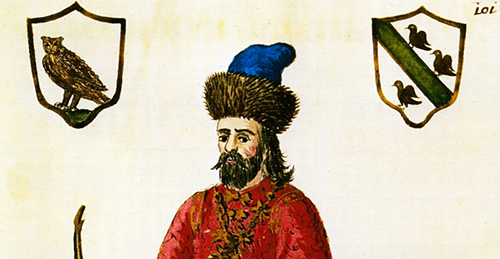
Marco Polo
A great explorer named Roald Amundsen once said: “adventure is just bad planning.”   In the days of Marco Polo, a 13th century teenager journeying into the unknown with his father and uncle, an adventure was all but guaranteed.  Polo returned to his native Venice 24 years after he set out, having travelled further into Asia than any European before him.  Polo’s stories inspired people with tales of exotic lands, strange civilizations, and curiosities like paper money, eyeglasses and spaghetti.  Although it is odd that he never wrote about The Great Wall of China, or tea, his writings inspired the imaginations of countless explorers to come, including Christopher Columbus.

Picture

Magellan
Portugal gave the world many of its great explorers, such as Magellan, the first navigator to cross the Pacific, and lead an expedition that ultimately circumnavigated the globe. The Age of Discovery was not for the faint-hearted.  Some 232 sailors died on Magellan’s expedition, including Magellan himself, who was hacked to pieces by a tribe in the Philippines.  Although Portuguese, Magellan was funded by rival Spain in his quest to open new spice routes.  The expedition discovered the need for an international date line, and reported of unknown creatures like the penguin and llama.  While the great voyage did not reap the material benefits Spain had wished, it did establish the true scale of the planet.

Picture

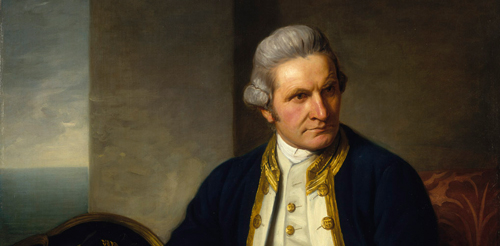
Captain Cook
During three great voyages in the late 18th century, Cook became the great discoverer of the Pacific Islands and beyond.  On his first voyage, his crew mapped New Zealand and became the first Europeans to see Australia’s east coast.  Surviving the rigors of sea and the malaria that claimed many of his crew, Cook returned home before embarking on his second voyage, crossing the Antarctic Circle, returning to New Zealand before discovering the islands of Vanuatu, New Caledonia, along with Easter and Norfolk Island.  Here is a man who clearly was immune to seasickness.  His final journey brought him to North America, where he sailed along the Alaska and the coast of what is now British Columbia.  Cook was the first European to discover Hawaii, and it here where he met his fate at the hands of hostile natives.  Considering the length of his adventure and the scale of his journey, it is remarkable that Cook survived as long as he did.   The Cook Islands, which he discovered in 1773 as the Hervey Islands, was renamed in his honour in the 1800’s.

Picture

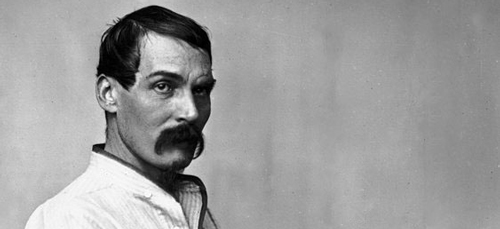
Richard Francis Burton
Before Richard Burton the actor, there was Sir Richard Francis Burton, the great British explorer.  Here is a man who could communicate in 29 European, Asian and African languages, who brought the Karma Sutra to the scandalized Victorian era, and who got circumcised during his successful plan to experience the Hajj to Mecca.  During his African adventures, Somali warlords impaled his face with a spear, leaving an intimidating scar. He searched the source of the Nile, discovered Lake Victoria, and survived the politics and spats of the conservative Royal Geographical Society.  Devoted to eastern religions and breaking sexual taboos, many of his journals were ironically burned by his wife after his death, perhaps scandalized by what she had read.

Picture

Nelly Bly 
The domain of great explorers is not limited to men.  Think of Amelia Earhart, or Junko Tabei who became the first woman to climb Everest and all seven summits.  Gertrude Bell, Isabella Bird, Mary Kingsley, and young Laura Dekker, who sailed the world solo at the tender age of 15.  In 1890, 26 year-old American journalist Nelly Bly set the world record for the fastest trip around the world.  Inspired by Jules Verne, she completed the journey from England, through Europe, Asia and onwards to North America in 72 days, travelling primarily by rail and steamboat.  Spare a thought for Canada’s own Aloha Wonderwell, once marvelled in the media as “the world’s most travelled girl.”   Her remarkable life, which includes being the first women to drive across India as well as Cape Town to the Nile, reads like a big budget Hollywood movie just waiting to happen.

Picture

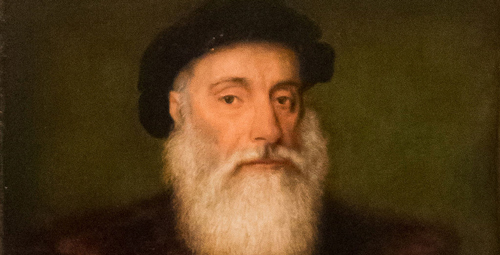
Vasco da Gama

We return to the Great Age of Discovery where Portuguese navigator Vasco da Gama sailed from Europe to Africa, before pointing his ships east into unchartered territories.   The surviving crew had already sailed 6000 miles of open ocean, more than anyone before them.  Now they made their way up the East Coast of Africa, encountering hostile sultans before crossing the Indian Ocean to land in India just 23 days later.  After a less than favourable welcome, unfavourable winds resulted in it taking 132 days for the return crossing, by which time half the crew were dead.  Although da Gama eventually returned to a hero’s welcome in Portugal, his subsequent actions were far from heroic.  Returning to India several years later, he became known for his brutality, massacring innocents along the way, mutilating prisoners, and failing to secure peaceful trade with the Indian sub-continent.

Picture

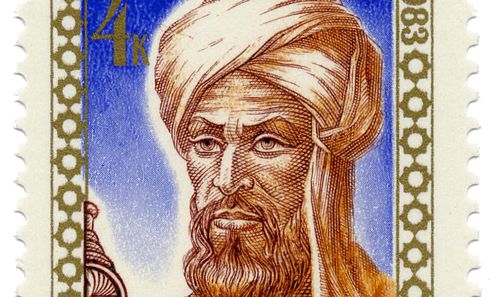
Ibn Battuta
Why is it that kids play the tag game “Marco Polo” and not Ibn Battuta?   Here was a near contemporary who travelled more than 73,000 miles in an age of sailboats and mules, who explored most of the known Islamic world including North and West Africa, South and Eastern Europe, South, Central and Southeast Asia as well as the Middle East and China.  It took him 30 years to visit today’s equivalent of 44 countries, aided by large caravans of unfortunate slaves for trading along the way.    Ibn Battuta’s adventures were recounted from memory in a great tome called the Rihla, but scholars have since questioned some of his claims.  The book lay in obscurity before it was rediscovered and translated in the 19th century, firmly establishing Ibn Battuta as one of history’s greatest travellers.

 Wanderwell

Aloha Wanderwell
Someone call Angelina Jolie.  You’ve probably never heard of a young Canadian lass named Idris Hall, aka Aloha Wanderwell.  Still a teenager, she hopped into a Model T Ford and drove through 75 countries in the 1920’s.  They called her “The World’s Most Travelled Girl.”   An early filmmaker, Aloha captured her husband and two kids as they explored the world.  Did she have adventures?  Stranded in Brazil, she lived with and documented the Bororo people.  Trying to find fuel (never mind roads) in the 1920’s, she used crushed bananas and animal fat for fuel.   Her husband was mysteriously murdered.  Apparently, she cut her hair and fought for the French Foreign Legion. She flew a seaplane.  In Indochina, she had to shoot her way out of a gauntlet of angry elephants.  She died in obscurity, and you’ve probably never heard of her. Even with a name like Aloha Wanderwell.

Picture

Sir Ranulph Fiennes
You’ll notice that everyone on this list is no doubt enjoying the great discovery of the afterlife.  All except Sir Ranulph Fiennes, who owns the moniker of being “the world’s greatest living explorer.”  Amongst his most notable accomplishments, Fiennes was first to reach both poles, cross the Antarctic and Arctic Ocean, hovercraft the Nile, cross the Antarctic unsupported, discover a lost city in Yemen, circumnavigate the world on its polar axis,  and run 7 marathons in 7 days on 7 continents – less than 4 months after a massive heart attack.  Clearly, the old boys would be proud that today’s stock are as hard core as ever, and what’s more, Fiennes has raised millions of dollars to fight cancer.   No slaves, no mutilations, just physical prowess and a true spirit of adventure.

Picture

Jacque Cousteau
For all the great explorers who have explored our world on the ground and above the seas, one man stands out for his remarkable work underwater.  70% of the planet is covered in water, and Jacque Cousteau’s work to enable underwater exploration, conservation, and photography (so us landforms can see what before we could not) makes him an icon in the world of discovery.  Cousteau’s efforts resulted in modern breathing apparatus like the Aqua-Lung, while he was the first man to brave the ocean, and freshwater deeps.   Another great underwater explorer deserves mention here as well.  Dr Sylvia Earle has proved underwater is far from a man’s world:  The National Geographic Explorer-in-Residence has led over 70 expeditions, broke numerous depth records, and logged lover 6500 hours underwater.

Picture

Travel Writers
We know about many of these explorers because of the writings that have accompanied them through the ages.  Travel writers have not only experienced wild adventures, they’ve communicated them in a way that brings us all along for the ride.  Among the greats: Ryszard Kapuscinski, V. S. Naipaul, Paul Theroux, Bruce Chatwin, Mark Twain,  Ernest Hemingway, Eric Newby, Pico Iyer, and a few of my personal favourites, Bill Bryson, Robert D Kaplan and Jon Krakauer.   These and thousands of others have journeyed to last outposts, deep jungle and wild frontiers to bring us words and images of a brave new world.With a nod to Shackleton, Columbus, Scott, Lewis & Clarke, Fawcett, Hillary, Astronauts, Cosmonauts, and all those brave men and women who continue to push the boundaries of experience.  Hey look, apparently I’m among some of them too!